
The great helmet debate: what is the lifespan of an equestrian helmet? While Tipperary helmets are built to last, we recommend replacing your helmet within 5 years from the date of purchase. This recommendation accounts for factors like wear and tear, exposure to sunlight and heat, sweat, hair products, and cleaning agents - each of which can gradually degrade your helmet’s protective qualities over time.
Understanding the Labels in Your Helmet
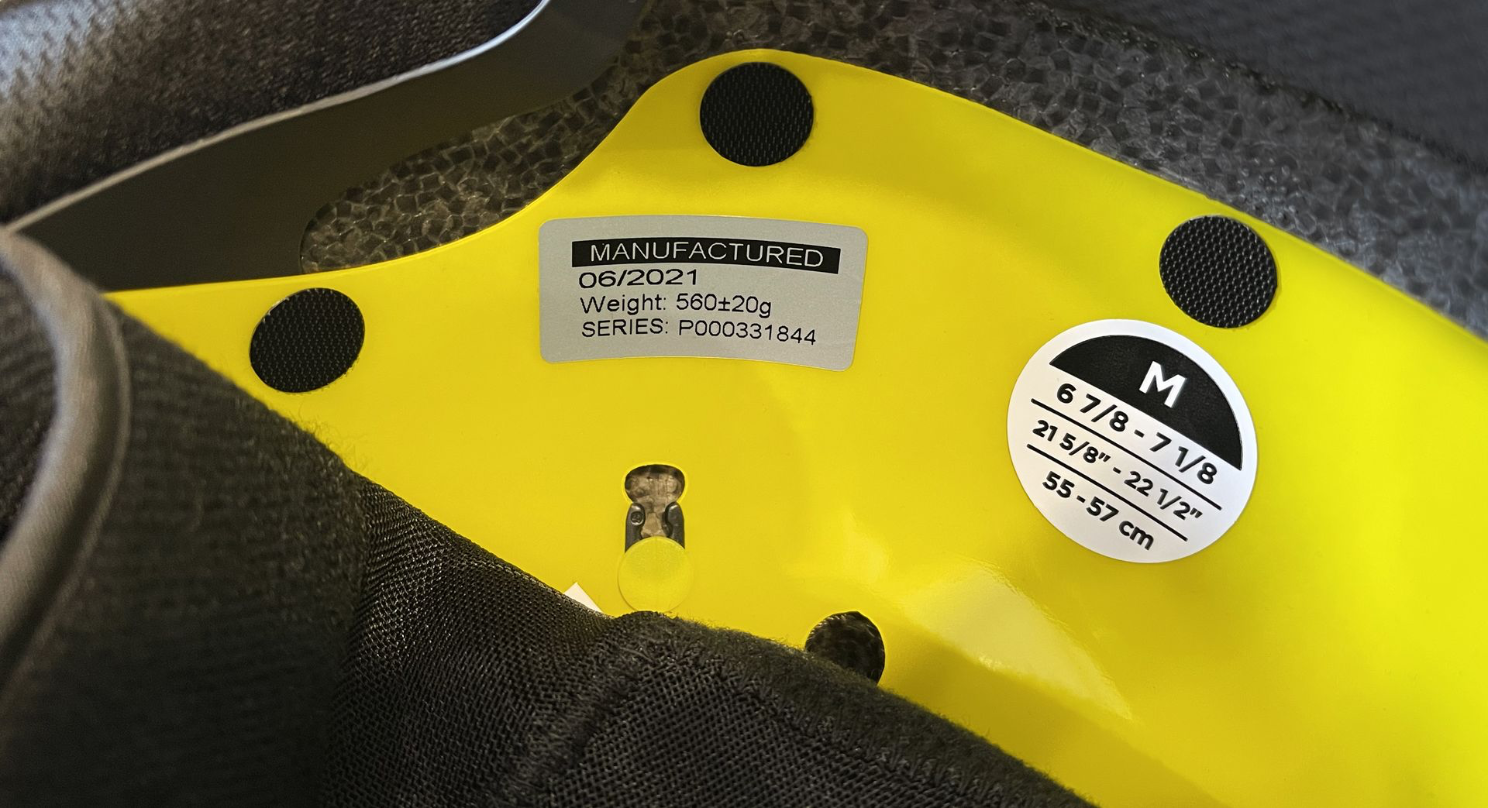
You will find a label inside of your Tipperary helmet including its manufacture date, and series number. This information is for internal tracking purposes and is required by the ASTM standard in case of a product recall or defect. Remember, this manufacture date is not an expiration date for your helmet.
When to Replace Your Helmet
Equestrian helmets are designed to be single impact helmets. If your helmet has been involved in a fall, it should be replaced immediately.
It’s also important to note if your helmet has been involved in any other impacts. Even if you manage to save yourself from an unexpected dismount, your helmet/brim making forceful contact with your horse's neck for example, can be enough to damage your helmet and/or brim. Has your helmet made contact with the barn floor one too many times? While one drop from a low height may not seriously affect the integrity of your helmet, several drops over time or a higher drop onto a hard surface would certainly affect how well your helmet can protect you moving forward!
No Unplanned Dismounts? It May Still be Time to Replace Your Helmet!
It is recommended that you replace your helmet at least every 5 years, even if it hasn’t been involved in a fall. The 5-year replacement guideline for equestrian helmets begins from the date of purchase, not the date of manufacture. Until your helmet is exposed to conditions leading to wear and tear, it is in brand new condition and shelf stable.
The rate of degradation can vary depending on how frequently the helmet is used and how well it’s cared for. If you have a particularly demanding riding schedule, you may need to replace your helmet sooner! The more often a helmet is worn and exposed to these conditions, the quicker the degradation can take place. Check for changes in the condition of your comfort liner or helmet padding, and harness. If a helmet no longer fits properly, rocks back and forth on your head, shows signs of damage, has an odor or other signs of wear and tear, it should be evaluated for replacement.
It’s also important to note that helmet technology and standards are continuously evolving. Advances in materials, design, and production methods may improve protective features over time, which is another reason for the 5-year replacement guideline.
Purchase Date Sticker
In order to help keep track of your helmet’s recommended 5-year lifespan, we introduced the purchase date sticker! Simply fill out the date you bought your helmet as a reminder for when the time comes to consider replacing your helmet.
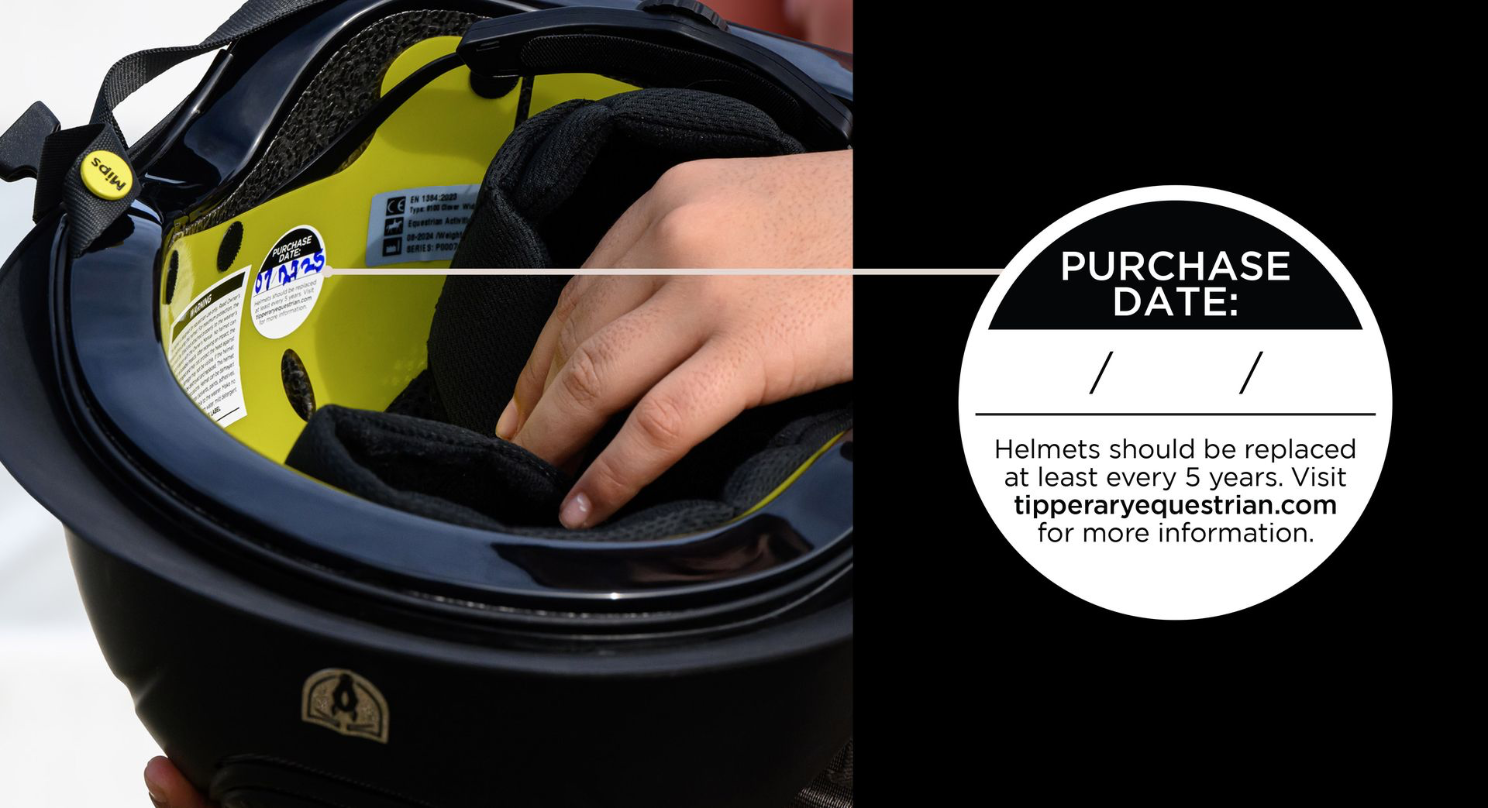
Don’t see a purchase date sticker in your helmet? Ask your local tack store!